

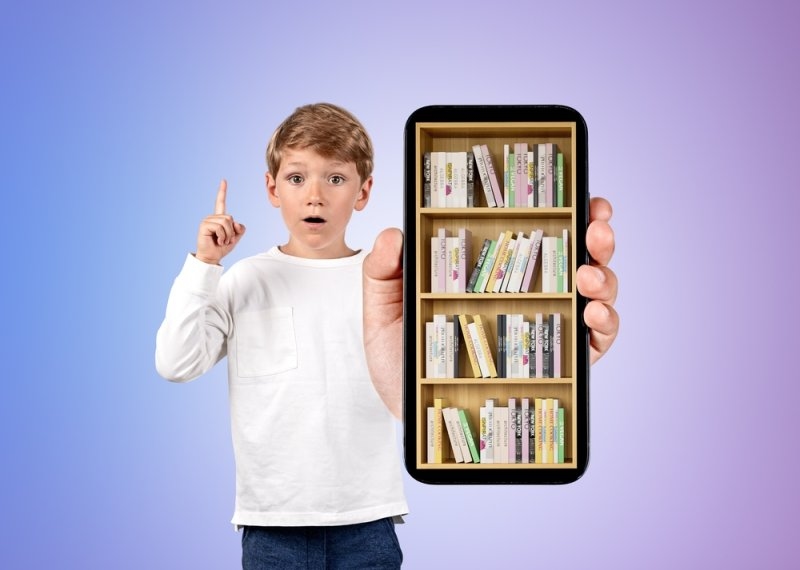
It's late, you need one chapter for tomorrow's class, and the library shut hours ago. Annoying, right?
That's the gap a digital library fills. So what is a digital library, exactly, and is it worth your time?
Here's a short guide to the meaning, features, benefits, types, and examples. No jargon, promise.
A digital library is a collection of electronic resources. Think books, magazines, audio, video, and other documents, all stored online and organized so you can find them fast.
You open them on a phone, tablet, or laptop, and you don't need to visit a building. Some people call it a virtual library, which is fair.
The purpose is pretty simple: get knowledge to people, wherever they are and whenever they need it. Students use it for research.
If that's you, our guide on what is a bibliography will help you cite what you find.
A digital library also protects rare and out-of-print books, because a scanned copy survives long after a fragile paper one wears out.
Behind the screen, a digital library system does a few jobs in a fixed order. Content comes in, gets labeled, and then gets delivered to you. It sounds basic, and it is.
But every step matters, because a badly labeled file is basically a lost file.
Staff scan printed books page by page, or they upload files that were digital from the start. Everything then gets converted into standard formats like PDF, EPUB, or MP3.
Quality rules matter here. So do copyright checks, since nobody wants a lawsuit over a scanned textbook.
Each file gets labels, called metadata. That means title, author, subject, date, and usage rights. It works like the old paper catalog cards, only faster.
Good tags let the search tool find one page inside millions of records in a couple of seconds.
You type a few keywords, maybe filter by subject, and the results pop up. Then you read online, stream, or download the file. Most platforms ask you to log in first.
Access rules decide who can open what, which keeps publishers happy and your data private.
Most digital library features exist to make one thing easy: finding what you want.
Some tools are obvious, like search, while others work quietly in the background. The table below covers the main ones and what each does for you.
| Feature | What It Does |
| Advanced search | Finds books, videos, and papers through keywords, filters, or author names |
| Metadata tagging | Organizes each item with title, subject, date, and rights details |
| Remote access | Opens content from any device with an internet connection |
| Multimedia support | Stores text, audio, video, and images in one place |
| Access control | Protects copyrighted and private files through secure logins |
Digital library benefits are mostly practical. You save time, money, and shelf space, and you stop worrying about closing hours. Here are the four that matter most in daily use.
So, what are the types of digital libraries you'll actually run into? Four kinds cover most cases, and each one is built for a different audience. Here's a quick look at them.
| Type | Main Purpose | Example |
| Academic | Supports student learning and research | University repositories |
| Public | Offers free reading material to communities | Digital Public Library of America |
| National | Preserves a country's cultural heritage | National archive collections |
| Corporate | Stores internal documents and training files | Company knowledge bases |
Which one fits you depends on what you need each day. A student and a company manager rarely want the same thing.
Plenty of free platforms show how an online digital library works. These digital library examples are a good place to start, and none of them ask you to pay.
Not sure what to read first? Our guide on fiction books vs nonfiction books can help you choose.
Both places share knowledge, but they work very differently. Access, cost, space, and speed are where the gap shows up, and the table below lays it out.
Plenty of readers use both, honestly. Print is better for slow reading, and digital wins for quick research.
| Factor | Digital Library | Traditional Library |
| Access | Anytime, anywhere online | Fixed hours and physical visits |
| Space | Nearly unlimited server storage | Limited shelf space |
| Search | Instant keyword results | Manual catalog browsing |
| Shared use | Many readers can often open one title together | Usually one reader per copy |
So, what is a digital library? It's a smart way to reach books and other media without leaving your chair.
Compare the types, check the features, and choose an online digital library that fits your goals and budget.
Start with one free platform this week. You'll probably wonder why you waited.
Often, yes. Plenty of public and open-access platforms won't cost you a cent. Some school, university, and company collections do want money or a login, so read the access rules before you dive in.
Not really. Digital wins on speed and reach, no question. But a real library still gives you quiet desks, community events, and printed books. Honestly, most people do best when they use both.
Students and researchers, mostly. But teachers, working professionals, and casual readers hop in too. They come for training guides, quick references, a good story, or those odd rare titles you'd never spot on a shelf.
Yes, they do. Every platform sets its own terms of service, and each item may carry licensing details in its metadata, so read the permissions carefully before you copy, share, or reuse anything.
Usually just a device with a stable internet connection and, sometimes, a free account or library card number. A few platforms also ask for a specific viewer, plugin, or app to open certain files.
This content was created by AI