


Every researcher knows the anxiety of finishing a major paper only to face a wall of unsourced notes. Compiling an accurate bibliographyy ensures your work remains credible while validating months of hard study.
Recent educational studies reveal that up to 80% of students struggle with source attribution, leading to unintentional academic misconduct. Understanding what is a bibliography protects your hard work and demonstrates scholarly rigor. Proper attribution shows respect for original authors while helping peers trace your research path.
In this comprehensive guide, we will unpack the foundational concept of bibliography, explore the primary types of bibliography, and provide step-by-step formatting examples to streamline your writing workflow.
A reference compilation is an organized list of sources consulted during research. It appears at the very end of an academic paper, book, or essay.
This detailed list gives full credit to original authors and researchers. It provides publication dates, author names, titles, and publishing locations. Without these references, academic writing lacks verifiable proof.
| Research Paper Section | Location | Key Information Included |
| Title Page | Front of document | Paper title, author name, institutional affiliation |
| Main Body | Middle section | Core arguments, data analysis, paragraph content |
| Source List | End of document | Author, publication date, title, publisher, access URL |
Mastering this compilation process helps you build strong academic arguments supported by reliable expert consensus.
Must Try: Best Research Strategies For Students: Library to Online
Many writers confuse reference lists with broader source compilations. While both credit external creators, their overall scope differs significantly.
| Comparison Feature | Reference List | Complete Bibliography |
| Included Works | Only items explicitly cited in text | All cited works plus background reading |
| Primary Goal | Direct source verification | Comprehensive topic overview |
| Common Fields | Scientific and medical journals | Humanities, history, and literature |
Knowing which format your publisher or professor requires prevents major layout revisions before final submission.
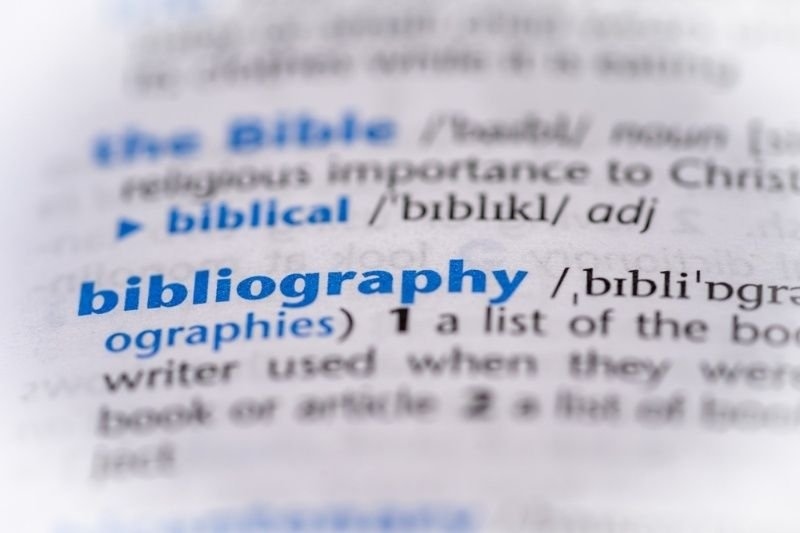
Understanding different compilation methods allows you to select the correct approach for your assignment or project.
This popular approach arranges sources logically by author name, subject, or date. It provides full bibliographic details without evaluating content.
This advanced method examines the physical nature of books and manuscripts. It focuses on printing histories, paper types, binding details, and textual variations.
An annotated list adds brief descriptive summaries under each entry. These short notes evaluate source relevance, accuracy, and author perspective for future researchers.
Different academic disciplines require specific citation rules. Here are the three most common styles used today:
| Style Standard | Primary Field | Entry Structure Example |
| APA Style | Social Sciences, Psychology | Smith, J. A. (2024). Principles of Modern Research. Academic Press. |
| MLA Style | Humanities, Literature | Smith, John A. Principles of Modern Research. Academic Press, 2024. |
| Chicago Style | History, Fine Arts | Smith, John A. Principles of Modern Research. New York: Academic Press, 2024. |
Failing to follow strict formatting guidelines can quickly undermine the visual structure of your reference list.
Essential Reads: How to Build a Personal Digital Library: Step-by-Step Guide
Building an accurate reference section requires a systematic workflow from start to finish.
1. Track Sources Early: Save complete publication details as you read articles or books.
2. Identify Required Style: Check your journal guidelines or syllabus for APA, MLA, or Chicago rules.
3. Alphabetize Entries: Sort all entries alphabetically using the primary author's last name.
4. Apply Hanging Indents: Indent every line after the first line by half an inch.
Creating a precise source compilation is a fundamental skill for researchers, students, and professionals alike. Throughout this article, we examined the core meaning of academic sourcing, highlighted key differences between reference pages, detailed common formatting pitfalls, and covered primary rules across major disciplines. Organizing your research sources accurately transforms complex writing projects into clear, credible masterpieces that stand up to academic scrutiny.
Streamline your entire writing process today. Access world-class digital libraries, explore rare literary databases, and discover comprehensive educational collections designed to support your scholarly journey. Start exploring expert research resources now to elevate your academic writing to the highest standards of excellence.
Primary sources offer raw, first-hand evidence directly from an event or period, such as diaries, historical documents, or original scientific experiments. Secondary sources analyze, interpret, or summarize those primary findings, including textbooks, review articles, and commentaries. Both source types require accurate entries to maintain clear academic transparency throughout your paper.
In-text citations point readers directly to the full source details listed in your final reference section. When you mention an author's name or publication year inside a paragraph, it corresponds directly with the alphabetical entry at the end of your document, allowing readers to locate original materials easily.
When a source lacks a named author, begin the citation entry directly with the work's title instead. Alphabetize the entry in your final list using the first major word of the title, skipping initial articles like "A," "An," or "The," while ensuring all publication dates and publisher details remain intact.
A Digital Object Identifier provides a persistent, permanent link to digital academic publications online. Unlike standard URLs that often change or break over time, including a DOI ensures that readers can always locate the exact online article, journal, or dataset regardless of host server changes.
A hanging indent offsets every line after the first entry line by half an inch. This specific layout choice makes author last names stand out clearly on the left margin, allowing instructors and researchers to scan down long alphabetical source lists quickly without reading entire paragraphs.
This content was created by AI