

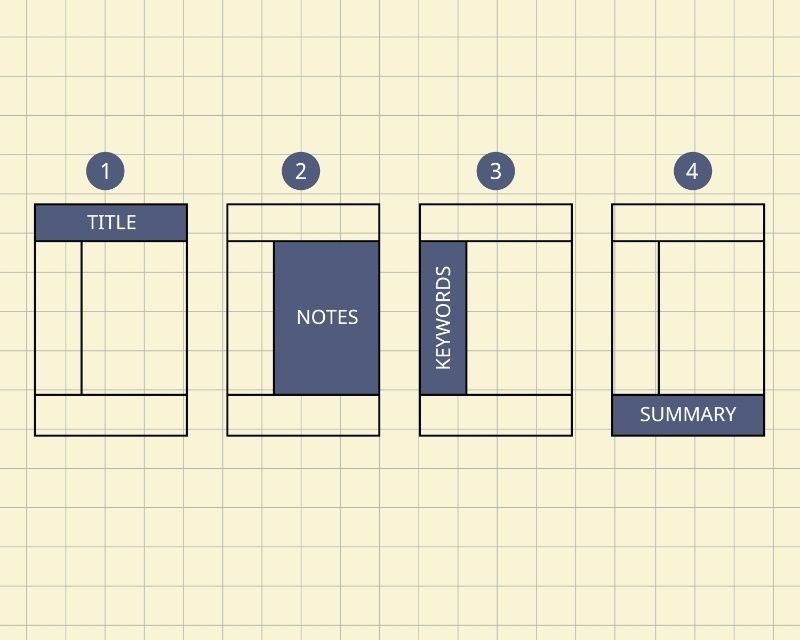
Most students take notes without thinking much about the method. Pages get filled, highlighters are everywhere, and arrows are pointing in random places. Later during revision, nothing makes sense. That’s where the Cornell system feels different. It gives structure without making studying robotic. Simple layout. Clear sections. Less mess during exams.
In this blog, you’ll understand how the Cornell Note Taking Method works, why it improves revision, ways to combine it with other study habits, common mistakes students make, plus practical revision strategies that actually help during exams.
The Cornell Note Taking Method divides your page into three parts: cue column, note section, and summary area. Looks basic at first. But the structure forces your brain to process information instead of copying it blindly.
Most students write notes like transcription machines. The teacher speaks, and they dump everything on paper. Later, they can’t identify key ideas. Cornell changes that. It pushes active recall naturally because the cue column becomes a self-testing tool during revision.
The page is split into sections:
That’s it. Nothing complicated. Yet this small change creates cleaner thinking. Notes stop looking like walls of text.
When you cover the main notes section and try answering questions from the cue column, your brain works harder. That struggle matters. Memory gets stronger when recall feels slightly difficult.
Passive reading feels productive. Usually it isn’t.
Students who repeatedly test themselves tend to retain more information compared to students who only reread chapters. Cornell naturally builds this habit into daily study sessions.
Also Read: How to Create a 30-Day Exam Study Plan That Actually Works
Good note-taking techniques are not about making pretty notebooks. Social media ruined this idea a little. Real study notes should help memory first, appearance second. Cornell works best when combined with fast thinking instead of decorative writing.
Many students try writing every sentence from lectures. Huge mistake. Your notes become crowded; revision becomes slower.
Instead, capture:
Skip filler explanations unless necessary. Short phrases often work better than long paragraphs.
You don’t need complete sentences all the time. Shortcuts save and manage time during lectures. For example:
Small things, but they speed up note-taking a lot, especially during fast classes.
Strong study notes reduce revision time later. That’s the real benefit. During exams, students rarely have enough hours to reread textbooks fully. Notes become survival material.
Cornell notes are built for compression. They turn large chapters into manageable review pages.
The bottom summary section looks small, yet it’s powerful. Writing summaries forces you to process information immediately after class. Even five lines can clarify an entire topic.
Later, during exams, reading summaries first helps refresh the chapter quickly before deeper revision.
The cue column should not contain random keywords only. Add questions too.
Examples:
Questions force retrieval practice. Your brain starts searching for answers rather than recognizing words passively.
Traditional notebooks often feel chaotic after a few weeks. Topics overlap. Important points disappear inside paragraphs.
Cornell keeps separation clear. You know exactly where definitions are, where explanations sit, where summaries belong. Less searching during stressful revision periods.
Effective note-taking depends on timing as much as structure. Many students either write too much or too little. Both create problems. Cornell works best when you combine listening with selective recording.
While listening to lectures:
That last step matters a lot. Delay it for days, and memory weakens already. And honestly, half the benefit comes from reviewing notes soon after learning.
Cornell also works well for self-study. While reading chapters:
This slows reading slightly, but understanding improves. You stop skimming mechanically.
Students love highlighters too much sometimes. Entire pages are glowing yellow. Completely useless.
Highlight selectively:
If everything is highlighted, nothing stands out anymore.
Good revision tips are usually simple. Students overcomplicate revision because panic grows near exams. Cornell notes help reduce that chaos.
Don’t revise one chapter once and forget it forever.
Instead:
Short repeated reviews usually outperform long cramming sessions.
Many students revise one subject for six straight hours. Attention drops badly after some time.
Mixing subjects creates a mental reset. For example:
Cornell notes make switching easier because information stays condensed and organized.
Different student study methods work better together instead of separately. Cornell is not meant to replace all study techniques. It supports them.
Questions from the cue column can become flashcards later. Especially useful for:
This creates two layers of revision from the same material. Efficient. Minimal extra effort.
Don't Miss: Finding Out How Many Hours Should You Study for Success
The Cornell Note Taking Method survives because it solves a basic student problem. Too much information, poor revision, scattered notebooks. The system creates order without needing complicated tools or expensive apps. Just structure. Questions, notes, summaries. Repeated consistently, it changes how students revise.
Yes, though students need slight adjustments. Instead of long theory summaries, use formulas, solved examples, shortcuts, and common mistakes in the notes section. The cue column can contain practice questions or formula triggers for quick recall during revision.
There’s no fixed size. Some chapters may fit into two pages, while others need ten. The goal is compression without losing understanding. If notes become almost as long as the textbook, they probably need trimming.
Cornell notes work really well for competitive exams, especially when you’re dealing with a huge syllabus. Their structure makes last-minute revisions easier and keeps everything organized. Instead of scrambling through messy worksheets and random highlights, you have all your info laid out so you can find what you need fast.
As for rewriting your notes just to make them look pretty—skip it. It’s not a great use of your time. You’re better off reviewing your notes, quizzing yourself, and fixing the parts you don’t get yet. Clear notes matter way more than perfectly neat ones.
This content was created by AI