

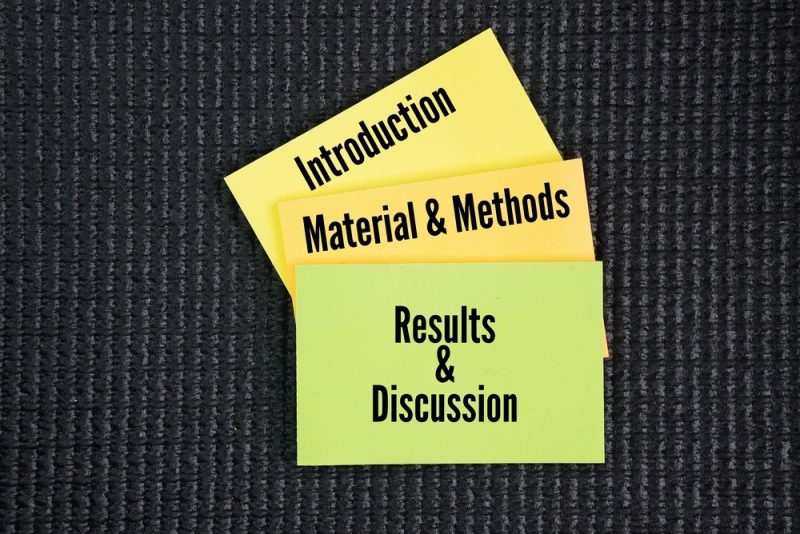
Knowing how to structure a paper and how to create parts of a paper gives you a guide while writing a paper. You also get planning guidelines, or an outline, that will help you organize the content of your paper even further as you write.
Once you are accustomed to the structure of a paper, writing a paper will become more efficient and understandable since you will know what the sources should include, what the format should adhere to, and how you will be graded in each section.
How a paper is formatted is basically the layout for all of the research, the argument itself, and the conclusion. The usual structure of any research paper would require that the paper begin with a title page, go through the introduction, a body, a concluding statement, and then a works cited/reference page. If your paper is based on original research, it will also include an abstract, method, results, and discussion sections.
The actual research paper format will depend on your assignment and any required style. APA, MLA, and Chicago styles prescribe rules for citing information, the use of headings and page numbers, and a bibliography or reference list; as always, heed the guidelines your instructor sets forth, rather than just copying from online sources.
Essential components of the basic paper format are:

Let’s learn how to write a research paper in some easy steps:
A research paper outline is your preliminary blueprint or guide that will help organize the whole research paper before you sit down to write. It's used to group similar ideas and to stop your paper from turning into something disjointed, just a collection of sources with little connection.
You'll begin building the outline for your research paper with either the hypothesis or question that you'll be exploring and then write down every main argument along with the evidence that backs them up. There can also be room for counterarguments or potential weaknesses to a particular aspect of your thesis, or where things could possibly develop later; the outline might change, if it has to, on the way through your research if stronger evidence is found.
Your outline will likely include elements such as:
Your writing should consist of an introduction that introduces your idea along with background information that helps a reader to grasp it; don’t fill in words and sentences that aren’t really helping the reader understand where your research project is coming from.
That's what the sections following this part should do anyway. These sections can, and should, provide evidence, explain it, and use it, and it should all relate to what you're researching.
An effective research paper structure typically consists of:
A common part in a paper on research might describe the topic of the research paper; a research paper will often take readers through the material. Reference some of the literature that was presented or found on research projects like yours; the topic should be based loosely on previously discovered points, if anything.
It should be thought that it's impossible to give a reader all the answers on what to do, so all you really have to do in a conclusion and research paper itself as a whole is make all the previous work clearly understood and put across new perspectives and ideas you were able to identify through your research. All these points work together and should contribute in some way to making what you discovered from your own research as easy to follow for other people as possible.
Using a research paper format example is excellent for understanding specific styles. An APA-formatted paper, for instance, has distinct guidelines for title pages, headings, page numbering, citations, spacing, and the reference list.
However, it's crucial to avoid simply copying an example without reviewing your assignment's requirements. Online examples may adhere to different citation guides or versions; treat them as illustrations, not templates.
Pay attention to more than just font and spacing in an example. Observe how it introduces the topic, develops supporting arguments, employs transition words, correctly places citations, and links the conclusion back to the thesis.
The final review before submission should focus on formatting after the content has been finalized. Check for inconsistent headings, incomplete citations, incorrect spacing, or errors in page numbers and the references section.
Compare the completed paper with your outline to ensure all essential points were covered and each section supports the main goal of the paper.
Verify the following in your research paper:
The use of a well-defined structure of a research paper is what enables a researcher to have an organized structure to their writing, but it cannot by itself guarantee an organized paper. Begin with a focused question, formulate a helpful research paper outline, and then organise sources in a logical order that complements the structure of a research paper.
The writing of a research paper would involve appraising sources, explaining sources, creating your own perspective, and integrating research sources within an argument and linking it to every section.
No. Assignments can call for different kinds of structures and citation styles; different approaches are best for, say, literature reviews versus lab work, or arguing a point compared to exploring the past. Take special note of any specific requirements given for your specific assignment.
Usually not. It's easier to draft a conclusion once you have finished all the material that will form the rest of the paper; if you have everything to include, then you have a firmer idea of the core findings, and it is easier for the conclusion to sum them up effectively.
A specific set of evidence, group, time frame, or relation that you can effectively analyze. A focused question would be one that is specific enough to allow you to research and conclude about it without too much in the way of extraneous background details—and one that fits within the available time frame, budget, and word limit!
No, and not always; if your instructor requests one, it may be required. In cases where a proposal is not explicitly assigned, however, a proposal is still invaluable to get rid of loose ends before you start and to know what material needs to be covered.
Focus more on why they're different than why it is easier to side with one over the other! Your conflicting sources may have differing methodologies, evidence, data, or dates, as well as just having different takes, and a discussion of these points helps to prove your writing skill.
This content was created by AI