


Most people don't actually think. They just rearrange the opinions of whoever they listened to last. You scroll through feeds, absorb an inflammatory headline, and suddenly find yourself fiercely defending a position you spent zero seconds actually researching. We all do it because the system is rigged to reward fast reactions over deep comprehension. Breaking out of that autopilot requires heavy friction. You need material that forces your brain to stop, evaluate, and actively challenge the premise being handed to you.
That is exactly where proper critical thinking books come into play. This isn't about scanning a self-help bestseller at the airport just so you look smart in Monday meetings. It is about completely rewiring how you process incoming information.
Reading complex material does a lot more than just expand your vocabulary. It actually rewires how your brain breaks down arguments—letting you spot hidden agendas before they ruin your decisions.
You learn how to separate how you feel about a controversial topic from the actual cold facts on the table. Good books train you to instantly spot manipulative, loaded language designed to make you angry, allowing you to evaluate the raw data hiding underneath the noise.
Every single argument rests on a foundation of unsaid beliefs. Strong analytical skills allow you to ignore the flashy presentation or the charismatic speaker. You learn to immediately target the baseline assumption the author is trying to sneak past you.
Instead of taking expert claims at face value just because they have a fancy degree, you start asking what they stand to gain. You develop a ruthless habit of looking for missing context, cherry-picked timelines, and conflicting financial incentives that ruin their entire premise.
Must Read: Enhance Study Skills Using Gamified Apps for Exam Success
Stop buying generic self-help books that just tell you to wake up at 5 a.m. and drink water. If you want a mind that slices through nonsense instantly, start with these five foundational texts.
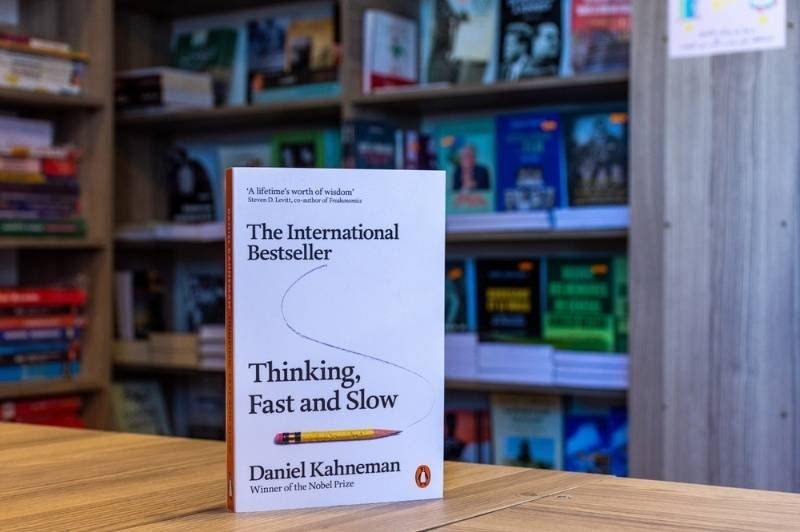
This book completely dismantles the comforting idea that humans make logical decisions. It breaks down the exact biases your brain uses to take mental shortcuts, showing you how to catch yourself before you make a stupid, emotionally driven leap of logic.
Sagan literally hands you a "baloney detection kit." He teaches you how to ruthlessly demand evidence in a world completely obsessed with pseudoscience, baseless superstitions, and loud charlatans pushing fake cures on the internet.
Most of what you think you know about global trends is completely wrong. Rosling exposes how our dramatic instincts distort reality and gives you a rock-solid framework for looking at terrifying statistics without panicking.
You think you are in control of your daily choices, but you aren't even close. Ariely shows exactly how retail pricing tricks, bizarre social norms, and hidden environmental cues manipulate your behavior and your wallet every single day.
This is a mandatory survival manual for the modern news cycle. It shows you exactly how politicians and marketers twist graphs, manipulate baseline averages, and frame data to make terrible arguments look like undeniable, scientific facts.
Stockpiling learning books on your nightstand won't do anything if you refuse to use the actual tools. You have to take the frameworks you learn from Kahneman or Sagan and apply them to your daily life immediately. The next time you read a viral news story that makes your blood boil, stop and identify the author's primary source. When a politician drops a massive, terrifying statistic, look for the baseline average they are comparing it against.
Real mental sharpness isn't about memorizing Latin names for logical fallacies so you can win an internet debate. It is the quiet, constant habit of refusing to accept cheap answers. You have to train yourself to pause, step back, and dismantle the information before you let it influence your behavior.
Your mind is exactly like your physical body—it directly adapts to what you feed it. If you consume junk information and shallow hot takes, you will produce junk decisions. Pick up the books that actually force you to slow down and map out a difficult argument. Question your own deeply held biases before you start questioning someone else's. The people who control their own thinking are the only ones who actually control their own lives. Do the heavy lifting now so you don't get manipulated later.
Yes. Good novels force you to track complex character motivations and understand conflicting viewpoints. It builds cognitive empathy. That is the exact same skill you need to analyze why real people make highly irrational decisions in business or politics. Fiction forces you to understand the "why" behind an action, not just the action itself.
Mute the television and just read the bottom ticker or look at the raw footage. News anchors use vocal inflection and urgent pacing to trigger your anxiety. Stripping out the audio forces you to evaluate the actual facts without getting swept up in the manufactured panic. You will be amazed at how boring and unconvincing a news broadcast becomes when you can't hear the dramatic music playing in the background.
Stop using highlighters entirely. Highlighting just tricks your brain into thinking it learned something. Instead, close the book at the end of every chapter and force yourself to write down the core argument in three sentences using your own words. If you can't summarize it without looking at the page, you didn't actually learn it.
High intelligence usually just means you are much better at rationalizing your own emotional biases. Smart people often use their massive intellect to defend a gut reaction they already had, rather than using it to find out what the actual truth is. They build highly complex arguments to justify completely irrational behavior.
Middle school is the absolute ideal window. Before teenagers get completely locked into social media echo chambers, they need a baseline understanding of how to spot bad arguments. If they don't learn how to verify claims early, they get manipulated by whatever trend goes viral next.
This content was created by AI