


Build a study stack that actually saves you time, protects your grades, and keeps your mind sharp.
You don’t have to choose between a messy notebook, endless Google searches, or panicked cramming anymore. AI study tools can now help with everything from handling lecture notes and making practice questions to planning essays, learning languages, and setting up revision schedules. That said, the good ones still need you to bring your own judgment.
This guide is for high schoolers, college students, or grad students who want real help—but don’t want to outsource their learning. The idea’s simple: pick tools that cut busywork, help you actually remember things, and point out your weak spots before an exam catches you off guard.
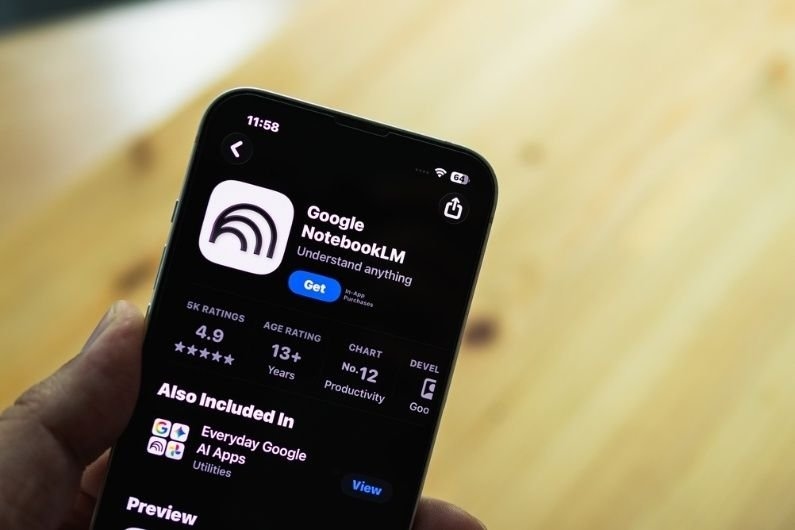
Don’t start with brands—start with what you need to do. Most students can cover their bases with four kinds of tools: an explainer, a note system, a flashcard or quiz tool, and a research assistant that points you to actual sources.
Pick apps that walk through steps, ask follow-ups, and switch things up if you miss something. Khan Academy’s Khanmigo, ChatGPT tweaked with a study prompt, Claude, and specialized math solvers all work. Ask them for hints before asking for straight-up answers.
RemNote, Notion AI, Mem, Quizlet, and Anki turn your lecture notes into something useful by converting facts into prompts. The best way? Write out what you learned in your own words within a day, then pull out five to ten cards from the hardest ideas.
Don't Miss: AI-Proctored Exams That Shape Fair And Flexible Testing
Using these tools randomly gives you random (and probably bad) results. You get more out of them when you pair each tool with a real spot in your week—right after class, a couple of days before a quiz, or the morning after you slog through a hard reading.
Right after your lecture, spend five minutes fixing up your notes, ten minutes asking your AI assistant for likely test topics, and five minutes writing questions you still don’t get. Doing this daily beats spending three hours cleaning things up on Sunday when it’s all gone fuzzy.
Practice tests actually help because they force you to recall info—not just recognize it when you see it. Use digital tools to mix up quizzes, then keep track of what you miss—whether it’s a careless slip, missing concept, weak formula, or just bad time management.
Fast answers can turn you into a passive learner if you’re not careful. Treat AI as a coach: let it quiz you, grade drafts, and break down mistakes, but don’t let it do all the mental work.
AI still messes up with fake citations, misunderstood prompts, or super-confident explanations that skip a step. For papers, verify every source in your library database or Google Scholar. For problem sets, try the same method on a similar textbook problem.
Never paste in personal medical info, unpublished lab results, other students’ records, or your professor’s exam questions. Check your school’s AI policy, too—some allow grammar help and outlines, but ban finished paragraphs written by software.
Suggested Reading: AI Exam Preparation Changes How Students Revise and Practice
The best AI study tools are the ones you’ll actually use three times a week—not just the ones with endless features. When you search, “What’s the best AI study tool for students?”—the real answer depends on your habits, workload, and your course’s rules.
| Study need | Good fit | Use it for |
|---|---|---|
| Hard concepts | Khanmigo, ChatGPT, Claude | Hints, analogies, step checks |
| Lecture notes | RemNote, Notion AI, Mem | Summaries, links, recall prompts |
| Memorization | Anki, Quizlet, Knowt | Spaced repetition and quizzes |
| Research | Perplexity, Elicit, Consensus | Paper discovery and source scanning |
A useful tool saves you at least 30 minutes a week or helps you get a better score. If it just adds yet another inbox, dashboard, or subscription and doesn’t change your study habits, ditch it after two weeks.
Match your tool to the class. Use an explainer for calculus, a citation checker for history, spaced repetition for anatomy, and speech feedback in language classes where fluency and pronunciation count.
Also Read: How AI in Research Is Redefining Academic Discovery
Here’s the bottom line: the right setup won’t make you disciplined, but it does make staying disciplined easier. Grab one tool for understanding, one for notes, and one for recall. Judge them by your results—more concepts understood, faster reviews, better practice test scores.
Your thinking matters most. Don’t just accept answers—ask for hints first, check anything that affects your grade, and create a routine you can stick with even when you’re slammed with work—not just when you’re feeling motivated.
The best AI study tool really depends on what you’re trying to do. Khanmigo and ChatGPT are great for breaking down tough topics or explaining things in plain language. If you want help organizing your notes, RemNote or Notion AI make it pretty painless. For memorizing things—think vocab, dates, or formulas—Anki and Quizlet are tough to beat.
As for cheating—AI crosses the line when you pretend the work is all yours, sneak in AI-generated paragraphs without saying so, or ignore your class policies. But if you’re using it to brainstorm ideas, check your grammar, get feedback, or practice with new questions, you’re probably in the clear. When in doubt, go with your school’s rules—they set the limits.
When it comes to paying for a tool, start where you hurt most. If you keep forgetting facts, go for a spaced-repetition app. If understanding concepts gives you trouble, get an explainer. If research sucks up your time, a tool that helps with finding sources is worth the cash. Test things out with free trials until you’re sure what clicks.
Use AI to whip up practice questions that mix topics, break down answers you got wrong, and reshape your notes into a real review schedule. Don’t just ask for mega-summaries—recognizing old material is easier than actually recalling it for the test. You’ll get more out of a couple of short quiz sessions spread over the week than a desperate last-minute cram.
This content was created by AI